Famous Modern Artworks Timeless Pieces
- 1.
The Birth of Modern Art: When Rules Got Tossed Out the Window
- 2.
Picasso’s Guernica: The Painting That Screamed War
- 3.
Warhol’s Soup Cans: When Pop Culture Became High Art
- 4.
Pollock’s Drip Paintings: Controlled Chaos on Canvas
- 5.
Dali’s Melting Clocks: Surrealism’s Wildest Dream
- 6.
Kahlo’s Self-Portraits: Pain Transformed Into Power
- 7.
Basquiat’s Crowns: Street Poetry on Canvas
- 8.
Gen Z’s Art Obsession: Memes, NFTs, and Digital Rebellion
- 9.
Where to Explore More Groundbreaking Art
Table of Contents
famous modern artworks
The Birth of Modern Art: When Rules Got Tossed Out the Window
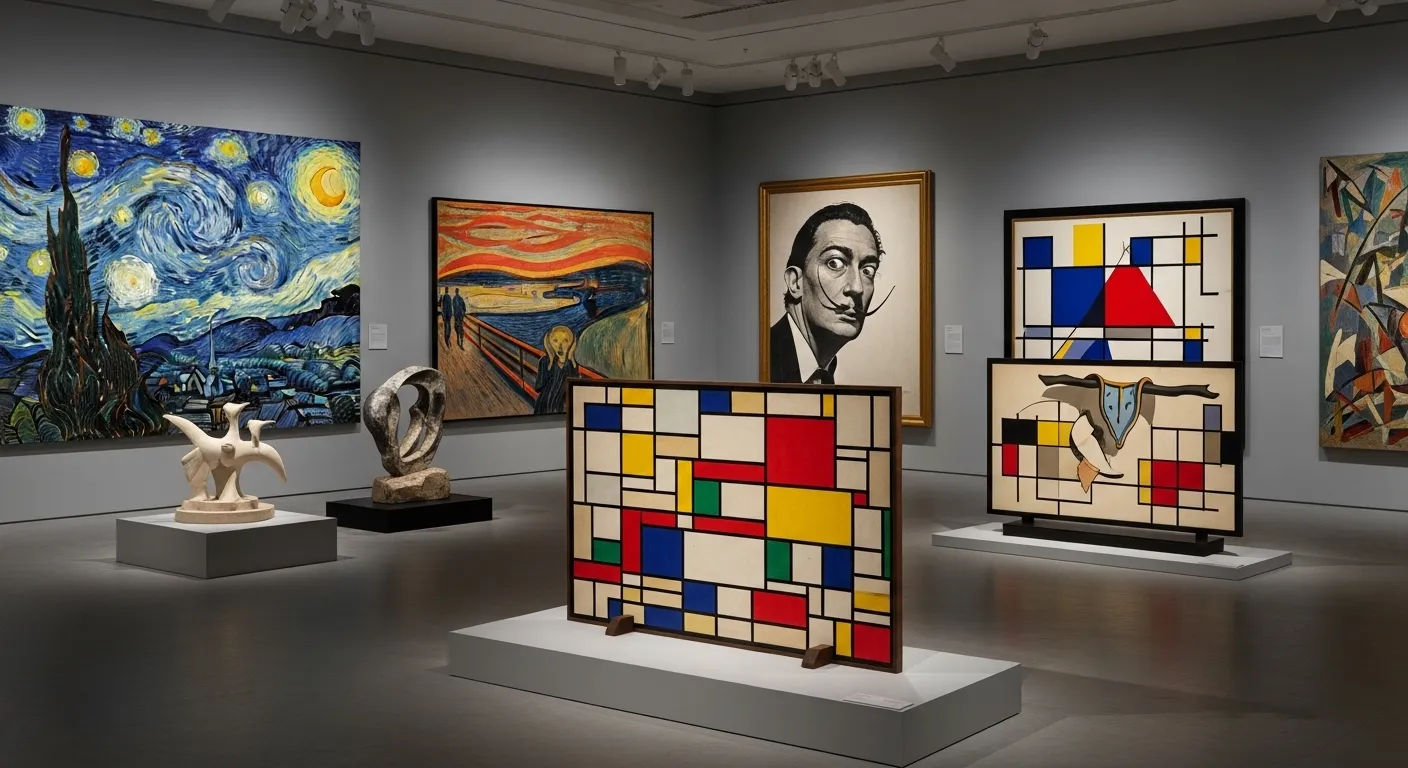
Modern art didn’t just show up one day wearing skinny jeans and a smirk—it exploded onto the scene like a Molotov cocktail of creativity. We’re talking late 19th to mid-20th century, when artists said “screw it” to classical realism and started painting how they *felt*, not how things *looked*. The famous modern artworks from this era—think Van Gogh’s swirling skies or Picasso’s fractured faces—weren’t just pretty pictures; they were middle fingers to tradition wrapped in oil paint. This was the golden age when art stopped being about perfect technique and started being about raw truth. And honestly? Those famous modern artworks still hit harder than your morning espresso because they dared to be messy, human, and unapologetically weird.
Picasso’s Guernica: The Painting That Screamed War
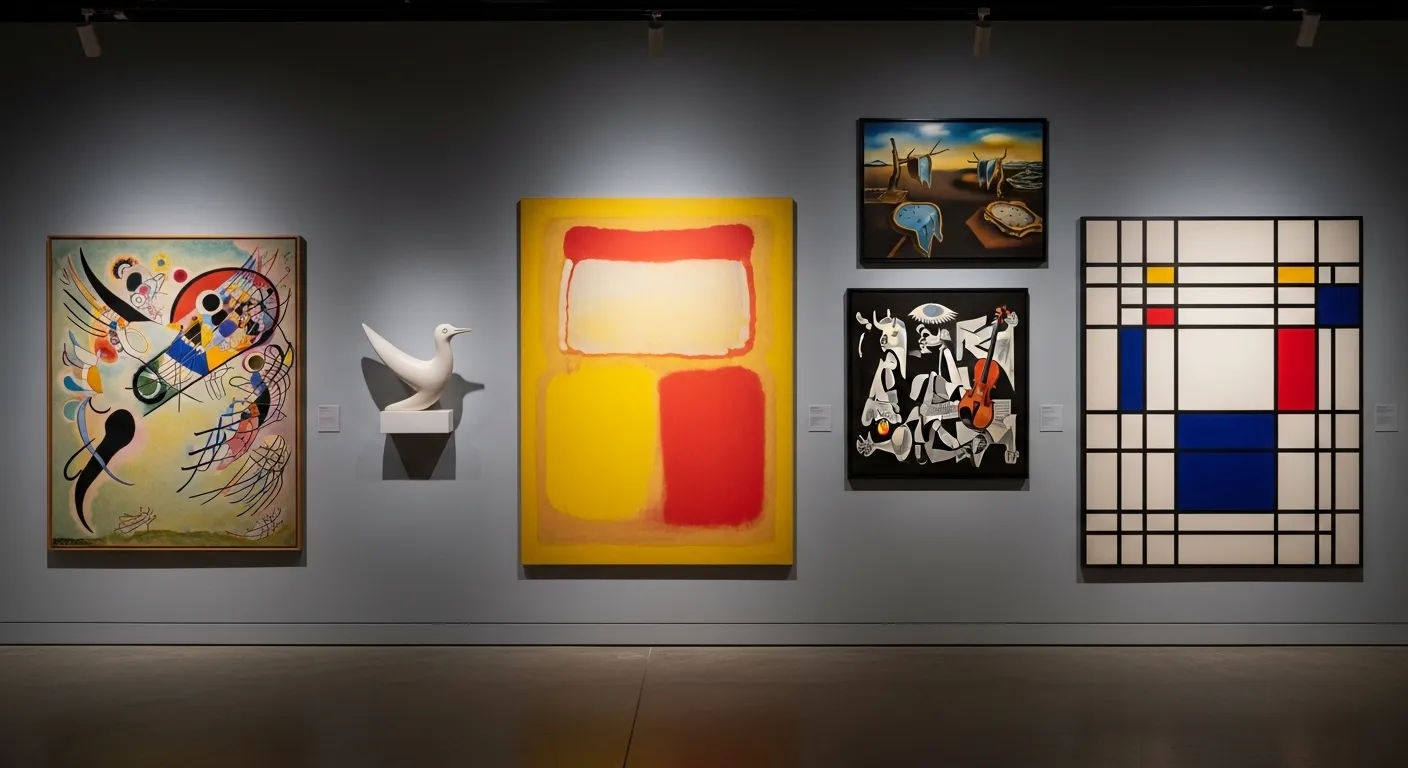
If one piece could sum up the soul-crushing horror of war, it’s Picasso’s *Guernica*—a monochrome nightmare that’s somehow more violent in black-and-white than any blood-soaked blockbuster. Painted in 1937 after Nazi bombs flattened a Spanish town, this mural-sized masterpiece uses jagged shapes and distorted bodies to scream what words never could. It’s not just one of the most powerful famous modern artworks; it’s a political weapon disguised as art. Fun fact: Picasso refused to let it return to Spain until democracy was restored—proving these famous modern artworks aren’t just for gawking; they’re for fighting.
Warhol’s Soup Cans: When Pop Culture Became High Art
Andy Warhol looked at a Campbell’s soup can—the same one your broke college self lived on—and saw immortality. His 1962 series *Campbell’s Soup Cans* wasn’t just cheeky; it was revolutionary. By elevating mass-produced junk to gallery walls, Warhol blurred the line between commerce and culture, asking, “Why can’t everyday stuff be art?” These famous modern artworks sparked debates that still rage today: Is art about skill… or ideas? Love it or hate it, Warhol’s soup cans are iconic precisely because they’re so damn ordinary—making them some of the most relatable famous modern artworks ever created.
Pollock’s Drip Paintings: Controlled Chaos on Canvas
Jackson Pollock didn’t use brushes—he danced around canvases flinging paint like a mad scientist conducting a symphony of splatter. His drip paintings (like *Number 1A, 1948*) look random, but every splash was deliberate—a visual jazz solo frozen in time. Critics called it “childish,” but Pollock knew better: he was mapping his psyche onto canvas. These famous modern artworks redefined what painting could be, turning the act itself into performance art. And yeah, one sold for $140 million USD—proof that sometimes, chaos pays better than order.
Dali’s Melting Clocks: Surrealism’s Wildest Dream
Salvador Dalí’s *The Persistence of Memory* (1931) is the poster child for trippy dreams—those limp clocks draped over branches like forgotten laundry. But don’t mistake it for nonsense; Dalí was obsessed with Einstein’s theory of relativity, painting time as fluid, not fixed. This piece became one of the most recognizable famous modern artworks by making the abstract feel visceral. Fun twist? He painted it after eating Camembert cheese, claiming it sparked his “melting” vision. So next time you blame dinner for weird dreams, remember: it might just birth the next iconic famous modern artworks.
Market Madness: What These Masterpieces Are Worth Today
Let’s talk numbers—because nothing says “art” like jaw-dropping price tags. Here’s a snapshot of auction records for famous modern artworks:
- Willem de Kooning’s *Interchange* (1955): **$300 million USD** (private sale, 2015)
- Paul Gauguin’s *Nafea Faa Ipoipo* (1892): **$210 million USD** (2015)
- Mark Rothko’s *Orange, Red, Yellow* (1961): **$86.9 million USD** (2012)
- Frida Kahlo’s *Diego y yo* (1949): **$34.9 million USD** (2021)
Kahlo’s Self-Portraits: Pain Transformed Into Power
Frida Kahlo turned her physical agony—spinal injuries, miscarriages, chronic pain—into hauntingly beautiful self-portraits that stare right through your soul. Works like *The Two Fridas* or *Self-Portrait with Thorn Necklace* aren’t just famous modern artworks; they’re battle cries for resilience. She painted herself with unibrows and mustaches, rejecting beauty standards decades before “body positivity” was a hashtag. Today, her face is on everything from mugs to murals, proving these famous modern artworks resonate because they’re raw, real, and radically honest.
Basquiat’s Crowns: Street Poetry on Canvas
Jean-Michel Basquiat went from graffiti tagger (“SAMO”) to art-world superstar faster than you can say “neo-expressionism.” His chaotic canvases—packed with crowns, skulls, and scribbled phrases—were social commentaries on race, power, and inequality. Pieces like *Untitled* (1982), featuring a skull crowned in red, sold for **$110.5 million USD** in 2017, making him the most expensive American artist ever. These famous modern artworks matter because they’re urgent, unfiltered, and born from the streets—not some ivory tower.
Gen Z’s Art Obsession: Memes, NFTs, and Digital Rebellion
Forget dusty galleries—Gen Z’s devouring art on TikTok, Instagram, and crypto wallets. They’re obsessed with digital pioneers like Beeple (whose NFT sold for **$69 million USD**) and street artists like Banksy, whose shredded *Girl with Balloon* became instant legend. Why? Because these famous modern artworks speak their language: ironic, tech-savvy, and socially conscious. Gen Z doesn’t just want art to hang on walls; they want it to *do* something—challenge norms, spark discourse, or live in their Metaverse apartment. Traditional famous modern artworks? Still revered, but now sharing space with pixelated apes and AI-generated dreamscapes.
Where to Explore More Groundbreaking Art
If your brain’s buzzing with curiosity about the art world, start at the source: visit Galerie Im Regierungsviertel for curated insights into contemporary movements. Dive deeper in our Art section, where we unpack everything from Renaissance techniques to AI art scandals. And for a masterclass in modern giants, don’t miss our deep dive into MoMA New York Collection Modern Masters. Whether you’re researching famous modern artworks or hunting your next obsession, we’ve got the map to navigate this wild, wonderful world.
Frequently Asked Questions
Who are the 13 modern artists?
While there’s no official "top 13," the term often refers to pioneers who defined modern art movements. Key figures include Pablo Picasso (Cubism), Salvador Dalí (Surrealism), Jackson Pollock (Abstract Expressionism), Frida Kahlo (Symbolism), Andy Warhol (Pop Art), Jean-Michel Basquiat (Neo-Expressionism), Wassily Kandinsky (Abstract Art), Henri Matisse (Fauvism), Georgia O’Keeffe (American Modernism), Mark Rothko (Color Field), Willem de Kooning (Action Painting), Marcel Duchamp (Dadaism), and Piet Mondrian (De Stijl). These artists revolutionized visual language, creating the famous modern artworks that still dominate museums and auctions today.
What art does Gen Z like?
Gen Z gravitates toward art that’s digital, interactive, and socially charged. They champion NFT artists like Beeple, street provocateurs like Banksy, and digital collectives pushing boundaries in virtual spaces. Unlike previous generations, they value accessibility and activism—often discovering famous modern artworks through social media rather than galleries. Their tastes blend nostalgia (Y2K aesthetics) with futurism (AI art), favoring pieces that challenge norms or exist beyond physical walls. This shift has revitalized interest in contemporary famous modern artworks that prioritize message over medium.
Who are the famous artist in the 2020s?
The 2020s spotlight artists merging technology, identity, and global crises. Leading names include Yayoi Kusama (infinity rooms), Ai Weiwei (political installations), Julie Mehretu (abstract landscapes), and digital creators like Refik Anadol (AI data sculptures). Street artists such as KAWS and Shepard Fairey remain influential, while NFT pioneers like Pak redefine ownership. These artists build on the legacy of famous modern artworks but adapt to digital ecosystems, climate anxiety, and social justice movements—proving modern art’s evolution never stops.
What are the top 10 most famous paintings?
While lists vary, the top 10 most famous paintings globally include several famous modern artworks alongside classics: Leonardo’s *Mona Lisa*, Van Gogh’s *Starry Night*, Da Vinci’s *The Last Supper*, Edvard Munch’s *The Scream*, Gustav Klimt’s *The Kiss*, Johannes Vermeer’s *Girl with a Pearl Earring*, Sandro Botticelli’s *The Birth of Venus*, Michelangelo’s *Sistine Chapel Ceiling*, Rembrandt’s *The Night Watch*, and Picasso’s *Guernica*. Among these, *Guernica*, *Starry Night*, and *The Scream* represent modern art’s emotional intensity, showing how famous modern artworks stand shoulder-to-shoulder with Renaissance icons in cultural impact.
References
- https://www.moma.org/collection/
- https://www.tate.org.uk/art/artists
- https://www.artnews.com/art-market/most-expensive-artworks-1234602345/
- https://www.nga.gov/collection.html